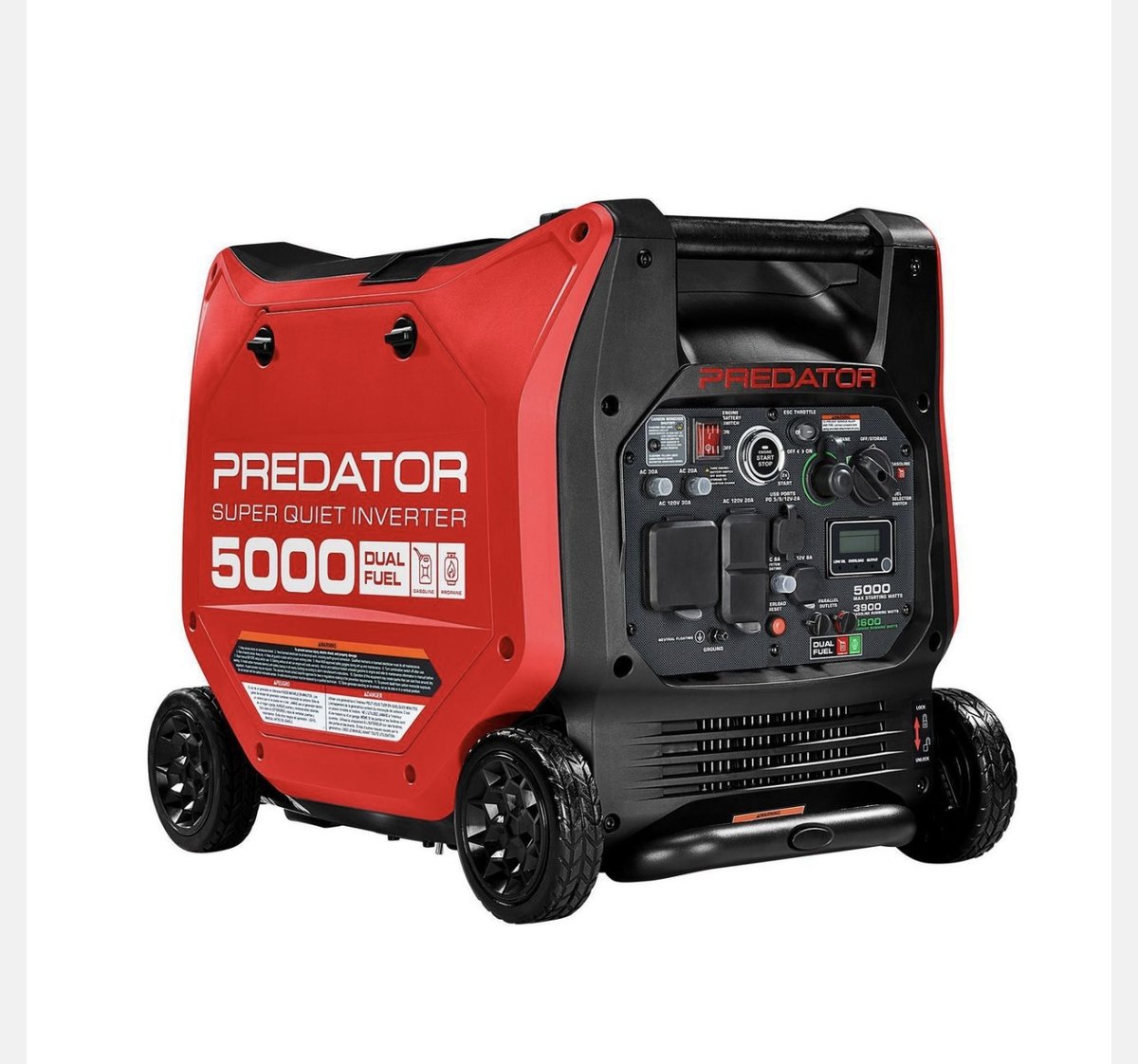
When the lights go out, your Predator 5000 Generator isn't just a machine; it's a lifeline. But like any vital piece of equipment, it only performs at its peak when given the right attention. That's why understanding and executing the essential maintenance for your Predator 5000 Generator is paramount – it's the difference between reliable power and frustrating silence during an emergency.
You invested in the Predator 5000 for its robust 5000 running watts, 6250 peak watts, and exceptional value. To ensure it consistently delivers, ready to power everything from your refrigerator and freezer to essential lights and even a window AC unit, a little proactive care goes a long way. This isn't about being a master mechanic; it's about simple, consistent habits that safeguard your investment and peace of mind.
At a Glance: Keeping Your Predator 5000 in Top Shape
- Oil Changes: Perform every 20-30 hours of use, or at least seasonally. Use 0.6 quarts of 10W-30 oil. This is the lifeblood of your engine.
- Air Filter: Clean or replace every 50 hours to ensure proper engine breathing and prevent dust from damaging internal components.
- Spark Plug: Inspect and clean every 100 hours; replace every 300 hours. A healthy spark plug ensures easy starts and efficient fuel combustion.
- Fuel Management: Always use fresh, unleaded gasoline (87+ octane). For storage over 30 days, add a fuel stabilizer.
- Storage: When storing for extended periods, drain the fuel system completely to prevent carburetor issues.
- Visual Checks: Before each use, inspect for loose parts, fuel/oil leaks, and debris.
- Safety First: Ensure proper grounding and operate in a well-ventilated area, away from living spaces.
Why Your Predator 5000 Deserves Attention
The Predator 5000, a stalwart from Harbor Freight Tools, has earned its reputation as a reliable and affordable mid-range portable generator. It's often the go-to for homeowners seeking emergency backup power, capable of running for 10-12 hours at a 50% load on its 4-gallon tank. This kind of performance doesn't happen by accident; it's engineered, but it also relies heavily on the owner providing consistent care. Think of it as a trusted tool – the better you treat it, the longer and more effectively it serves you. If you're looking to dive deeper into what makes this particular model tick, you can Explore the Predator Generator 5000 in detail.
This generator's 224cc OHV engine, while robust, operates under demanding conditions, especially during extended outages. Regular maintenance protects its internal components from wear, ensures optimal fuel efficiency (around 0.4 gallons per hour at 50% load), and helps mitigate common issues like starting difficulties or voltage fluctuations. Ignoring these simple steps is akin to neglecting oil changes in your car – it might run for a while, but you're drastically shortening its lifespan and inviting costly repairs down the line.
The Power of Proactive Care: Your Maintenance Schedule
Maintaining your Predator 5000 doesn't have to be daunting. It's about establishing a routine, much like changing the batteries in your smoke detector. By following a clear schedule, you'll catch potential problems before they become critical failures.
The "Every Use" Checklist: Pre-Flight Essentials
Before you even think about pulling that recoil start, take a minute for a quick visual inspection. This quick check can save you a world of trouble.
- Fuel Level and Quality: Ensure the tank has enough fresh, unleaded gasoline (87 octane or higher). If it's been sitting for a while, consider whether the fuel might be stale – more on that later.
- Oil Level: Use the dipstick to confirm the oil is between the "add" and "full" marks. Low oil can trigger the low-oil shutdown feature or, worse, cause engine damage.
- Visual Inspection: Look for any loose nuts or bolts, frayed wires, or obvious leaks (fuel or oil) around the engine or fuel tank. Check for debris blocking cooling fins or exhaust.
- Air Filter: Give the air filter cover a quick glance to make sure it's securely in place and not obviously clogged with large debris.
The Seasonal Tune-Up (or Every 20-30 Hours): Engine Oil is Lifeblood
Changing the oil is arguably the most critical maintenance task for your Predator 5000. It's the engine's lifeblood, lubricating moving parts, cooling the engine, and carrying away harmful contaminants.
Why it Matters: Over time, oil breaks down, losing its viscosity and ability to protect engine components. It also accumulates tiny metal particles and combustion byproducts, essentially becoming a grinding paste rather than a protective lubricant. Fresh oil ensures your 224cc OHV engine runs smoothly, reduces friction, and extends its overall life.
What You Need:
- Oil: 0.6 quarts (approximately 19.2 fluid ounces) of 10W-30 motor oil. In colder climates or specific conditions, consult your owner's manual for alternative viscosities, but 10W-30 is standard for most operating temperatures.
- Wrench: To remove the drain plug and dipstick.
- Drain Pan: To collect old oil.
- Funnel: To pour in new oil cleanly.
- Rags: For spills.
How-to: The Oil Change Steps
- Warm Up the Engine (Briefly): Run the generator for 5-10 minutes. Warm oil flows more easily, ensuring a more complete drain. Then, shut it down and disconnect the spark plug wire for safety.
- Position the Generator: Tilt the generator slightly, or place it on blocks, so the oil drain plug is at the lowest point. Position your drain pan underneath.
- Drain the Old Oil: Remove the oil fill cap/dipstick. Then, carefully remove the oil drain plug. Let all the old oil drain completely. This can take several minutes.
- Replace Drain Plug: Once drained, re-install the oil drain plug and tighten it securely. Don't overtighten, as this can strip threads.
- Refill with Fresh Oil: Using your funnel, slowly pour 0.6 quarts of fresh 10W-30 oil into the oil fill opening.
- Check Level: Re-insert the dipstick (don't screw it in for checking unless your manual specifies) and check the level. It should be at the "full" mark. Add small amounts if needed, checking frequently.
- Secure: Replace the oil fill cap/dipstick and re-connect the spark plug wire.
- Dispose Properly: Never pour old motor oil down drains or into the ground. Most auto parts stores or recycling centers accept used oil for free.
The 50-Hour Air Filter Refresh: Breathing Easy
Just like you need clean air to function, your generator's engine needs a clean air filter to perform efficiently. A dirty air filter chokes the engine, leading to reduced power, increased fuel consumption, and potential internal damage from ingested dust and debris.
Why it Matters: The air filter prevents dust, dirt, and other airborne particles from entering the carburetor and combustion chamber. Without it, these abrasive particles would grind away at the cylinder walls, piston rings, and valves, leading to premature engine wear and failure.
What You Need:
- Screwdriver (if applicable): To remove the air filter cover.
- Warm, Soapy Water: For foam filters.
- New Air Filter: If cleaning isn't sufficient or if it's a paper element.
- Clean Cloth/Paper Towels:
How-to: Air Filter Service
- Locate the Air Filter: The air filter housing is usually a black plastic box located near the carburetor. You'll typically find it on the side of the engine.
- Remove the Cover: Unclip or unscrew the fasteners holding the air filter cover in place and carefully remove it.
- Inspect the Filter: Take out the foam or paper element. Hold it up to a light source. If you can't see light through it, or if it's torn or visibly damaged, it needs to be replaced.
- Clean (Foam Filters): If it's a foam filter and not too dirty, wash it gently in warm, soapy water. Rinse thoroughly until the water runs clear. Squeeze out excess water, then allow it to air dry completely. You can lightly re-oil a dry foam filter with special air filter oil or a few drops of clean motor oil, then squeeze out the excess.
- Replace (Paper Filters or Damaged Foam): Paper filters are generally not washable and must be replaced if dirty. Always replace a torn or heavily contaminated foam filter. Replacement parts are readily available and affordable for the Predator 5000.
- Reassemble: Once clean and dry (or replaced), re-install the air filter element, then secure the air filter cover. Ensure a tight seal to prevent unfiltered air from entering the engine.
The 100-Hour Spark Plug Check-up (and 300-Hour Replacement): Ignition Excellence
The spark plug is responsible for igniting the air-fuel mixture in your engine's combustion chamber. A fouled, worn, or incorrectly gapped spark plug can lead to hard starting, misfires, reduced power, and poor fuel efficiency.
Why it Matters: A strong, consistent spark is crucial for optimal combustion. Over time, carbon deposits can build up on the electrode, the gap can widen or narrow, and the electrode itself can wear down, all of which compromise spark quality.
What You Need:
- Spark Plug Wrench: Often a specialized socket or tool.
- Wire Brush: To clean carbon deposits.
- Feeler Gauge: To check the electrode gap.
- New Spark Plug: Refer to your owner's manual for the correct type (e.g., NGK BPR6ES or equivalent).
- Gloves:
How-to: Spark Plug Service
- Disconnect Safely: Ensure the generator is off and cool. Disconnect the spark plug wire by firmly pulling the rubber boot.
- Remove the Old Plug: Use your spark plug wrench to carefully unscrew the spark plug. Turn counter-clockwise.
- Inspect: Examine the electrode.
- Light brown/tan: Good combustion.
- Black/sooty: Too rich a fuel mixture or dirty air filter.
- White/blistered: Too lean a mixture or overheating.
- Oily: Oil entering the combustion chamber (more serious).
- Check for any signs of physical damage or excessive wear.
- Clean (if Reusing): If the plug is merely sooty but otherwise in good condition, use a wire brush to gently clean the carbon deposits from the electrode and porcelain insulator.
- Check and Adjust Gap: Consult your owner's manual for the correct spark plug gap (typically around 0.028-0.031 inches or 0.7-0.8 mm). Use a feeler gauge to measure the gap between the center and side electrodes. Carefully bend the side electrode if adjustment is needed.
- Install New/Cleaned Plug: If replacing, thread the new spark plug in by hand first to avoid cross-threading. Once finger-tight, use the spark plug wrench to tighten it, usually about 1/2 to 3/4 turn after snug for a new plug, or 1/4 turn for a reused plug. Don't overtighten.
- Reconnect: Firmly push the spark plug wire boot back onto the new or cleaned spark plug.
Fuel Management: The Unsung Hero of Generator Longevity
Fuel-related issues are, by far, the most common cause of generator problems, especially for units that sit for extended periods between uses. Your Predator 5000's 4-gallon fuel tank and 7-8 hour run time at full capacity demand smart fuel practices.
Fresh Fuel is Non-Negotiable
Gasoline begins to degrade rapidly, especially with ethanol blends. Ethanol attracts moisture, leading to phase separation, where water and ethanol separate from the gasoline and can cause corrosion in your fuel system.
- Octane Rating: Always use fresh, unleaded gasoline with an octane rating of 87 or higher.
- Buy Small, Buy Often: Purchase only as much fuel as you expect to use within a month or two.
- Ethanol-Free (if possible): While harder to find, ethanol-free gasoline is ideal for small engines, as it minimizes moisture absorption and corrosion. If you must use ethanol-blended fuel, follow storage guidelines diligently.
The Power of Stabilizer: For Extended Storage
If you anticipate storing your Predator 5000 for more than 30 days with fuel in the tank, a quality fuel stabilizer is your best friend.
- How it Works: Fuel stabilizers prevent gasoline from breaking down, forming gums and varnishes that can clog the carburetor and fuel lines.
- Application: Add the recommended amount of stabilizer to your fuel tank (and any stored gasoline cans) before storing. Run the generator for 5-10 minutes to ensure the treated fuel circulates through the carburetor.
Draining for Long-Term Storage: The Safest Bet
For storage periods exceeding a few months, or if you simply prefer absolute peace of mind, draining the fuel system completely is the gold standard. This eliminates any risk of fuel degradation causing carburetor blockages.
How-to Drain:
- Run Dry: With the generator in a well-ventilated area, turn the fuel valve to the "OFF" position. Let the engine run until it starves itself of fuel and shuts down. This ensures the carburetor bowl is empty.
- Drain Tank (Optional but Recommended): If you wish to empty the main fuel tank, use a siphon pump to transfer the fuel into a safe, approved fuel container.
- Loosen Drain Screw (if available): Some carburetors have a small drain screw at the bottom of the float bowl. Loosening this can help drain any remaining fuel directly from the carburetor. Place a small container underneath to catch any drips.
Beyond the Basics: Other Critical Checks
While oil, air, and spark are the big three, a few other components deserve occasional attention to ensure your Predator 5000 remains a reliable powerhouse.
- Fuel Filter Inspection (if accessible): Many generators have an inline fuel filter between the fuel tank and the carburetor. If your generator is struggling for fuel, or if you notice debris in your fuel, inspect this filter. It may be a small screen inside the fuel tank petcock, or a separate component. Replace if clogged or damaged.
- Exhaust System Check: Periodically inspect the muffler and exhaust pipe for any cracks, rust, or blockages. An obstructed exhaust can lead to engine overheating and performance issues. Ensure the spark arrestor (if present) is clean.
- Grounding Terminal: The Predator 5000 includes a grounding terminal. Always ensure the generator is properly grounded according to your owner's manual and local electrical codes, especially when connected to a transfer switch. This is a crucial safety feature to prevent electrical shock.
- Circuit Breakers: Your generator is equipped with circuit breakers to protect against overloading. Test them occasionally by simulating an overload if safe to do so, or simply ensure they aren't loose or damaged.
Troubleshooting Common Predator 5000 Hiccups (and How Maintenance Prevents Them)
Even with diligent care, issues can arise. Understanding common problems and how basic maintenance often provides the solution will save you time and frustration.
- Starting Difficulties: This is the most frequent complaint for any portable generator, including the Predator 5000's recoil start.
- Maintenance Connection: Often traced back to old, stale fuel clogging the carburetor, a dirty or incorrectly gapped spark plug, or low oil levels triggering the shutdown sensor. Regularly refreshing fuel, using stabilizer, and servicing the spark plug and oil will dramatically reduce starting woes.
- Voltage Fluctuations: If your appliances are dimming or flickering, or sensitive electronics aren't happy, you might be experiencing voltage issues.
- Maintenance Connection: While sometimes related to overloading (the Predator 5000 can power many window AC units but struggles with central air), minor fluctuations can sometimes stem from poor engine performance due to dirty air filters affecting the fuel-air mixture. Keep those filters clean.
- Carburetor Problems: These manifest as rough running, stalling, or not starting at all.
- Maintenance Connection: Almost always due to fuel degradation. The small passages in the carburetor are highly susceptible to clogging from gum and varnish deposits left behind by stale gasoline. Proper fuel storage with stabilizer and draining for long-term storage are your best defenses.
- Oil Consumption: If you find yourself adding oil more frequently than expected (beyond the normal 0.6 quarts for an oil change), it might indicate an issue.
- Maintenance Connection: While some oil consumption is normal, excessive use could point to worn piston rings or valve seals. However, first ensure you're not overfilling the oil or that the oil drain plug isn't loose. Regular, correct oil changes ensure optimal lubrication and can help identify other issues early.
Safe Operation & Storage: Essential Best Practices
Beyond mechanical upkeep, how you operate and store your Predator 5000 is critical for both its longevity and your safety. This 132-pound workhorse, while portable with its tubular steel frame and solid rubber wheels, demands respect.
- Location, Location, Location: NEVER run your generator indoors, in a garage, or any enclosed space. Generators produce carbon monoxide (CO), a colorless, odorless, and deadly gas. Place your Predator 5000 at least 20 feet from your home, with the exhaust pointed away from windows and doors. The unit operates at 72-74 decibels at 23 feet, so choose a location where noise is manageable.
- Overloading Prevention: Understand your generator's limits (5000 running watts, 6250 peak watts). Prioritize essential appliances like refrigerators (700W), freezers (500W), and lights (400W). Avoid connecting power-hungry items like central air conditioning, which the Predator 5000 is not designed to handle. Use the various outlet options (1x 120V NEMA 5-20R, 1x 120V L5-30R, 1x 120V/240V L14-30R) appropriately.
- Pre-use Checklist: Always revisit your "Every Use" Checklist before starting.
- Storage Tips:
- Drain Fuel: As discussed, for long-term storage, drain the fuel tank and carburetor.
- Clean Exterior: Wipe down the generator, removing any dirt, grease, or debris.
- Cover: Use a breathable generator cover to protect it from dust, moisture, and pests.
- Location: Store in a dry, protected area, away from direct sunlight or extreme temperatures.
What Makes the Predator 5000 Stand Out (and Why Maintenance is Key to Its Value)
The Predator 5000 is a fantastic value proposition, often retailing around $549.99 (or less on sale), significantly undercutting many competitors for its power output. Its robust design is evident in its tubular steel frame and solid rubber wheels, making it durable despite its moderate 132-pound weight. It can handle most workshop tools, like table saws (1800W) and compressors (1600W), along with essential home items.
However, its 90-day warranty (extendable for 1-2 years for an additional cost) means that you, the owner, are largely responsible for its long-term health. This is where diligent maintenance pays off. By adhering to the recommended service intervals for oil, air filters, and spark plugs, you're not just preventing breakdowns; you're maximizing your investment, ensuring you get years of reliable power out of a generator praised by users for its power and affordability (averaging 4.2/5 stars). Proper care minimizes the chances of needing a warranty claim, making that extended warranty an even better value if you choose to get it.
It's worth noting the standard Predator 5000 is not CARB-compliant, meaning it cannot be sold or used in California or other CARB-adopting states. Harbor Freight does offer CARB-compliant alternatives if this is a concern for your location.
Thinking Ahead: When to Call in the Pros (or Consider an Upgrade)
While routine maintenance can prevent many problems, there are times when professional help is warranted.
- Beyond Your Comfort Zone: If a repair or inspection task feels too complex or you're unsure, don't hesitate to consult a certified small engine mechanic.
- Persistent Issues: If you've followed all maintenance steps and are still experiencing problems like persistent voltage fluctuations, excessive oil consumption, or unusual noises, it's time for an expert diagnosis.
- Advanced Needs: If your power needs grow beyond 5000 watts, you require an electric start option, ultra-quiet operation, or need a CARB-compliant unit for a new location, it might be time to consider alternative generators. Also, remember that connecting your Predator 5000 to your home's electrical system requires a professionally installed transfer switch ($300-500) – this is not a DIY task.
Your Generator, Ready When You Are
Your Predator 5000 Generator is a vital asset for preparedness. With a few hours of mindful maintenance spread across the year, you can ensure it's always ready to spring into action when you need it most. This isn't just about prolonging the life of a machine; it's about securing the peace of mind that comes with reliable power during uncertain times. Keep it clean, keep it fueled correctly, and keep it maintained, and your Predator 5000 will serve you faithfully for years to come.